
Difference between autoflowers and photoperiod plants
Short lead: Choosing the right seed type is the first step to a successful grow. Below we explain, in plain language, the botanical differences, growing timelines, yield expectations, and which option best suits your goals — indoor, outdoor, novice or pro.
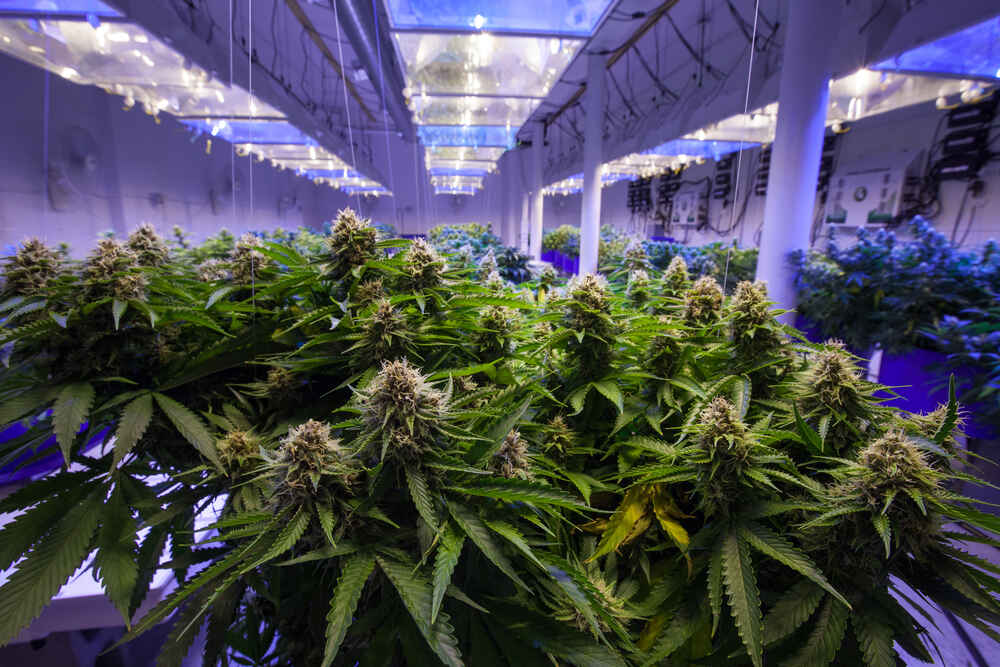
Compact, fast cycle. Ruderalis genetics trigger automatic flowering. Ideal for quick harvests.

Greenhouse-grown, large-structure plants. Full control over flowering via light cycles.
From the sun-drenched coasts of Queensland to the Mediterranean climate of the South – Australia offers a unique outdoor growing paradise. Here’s why your autoflowers and photoperiods will thrive under the Australian sun.
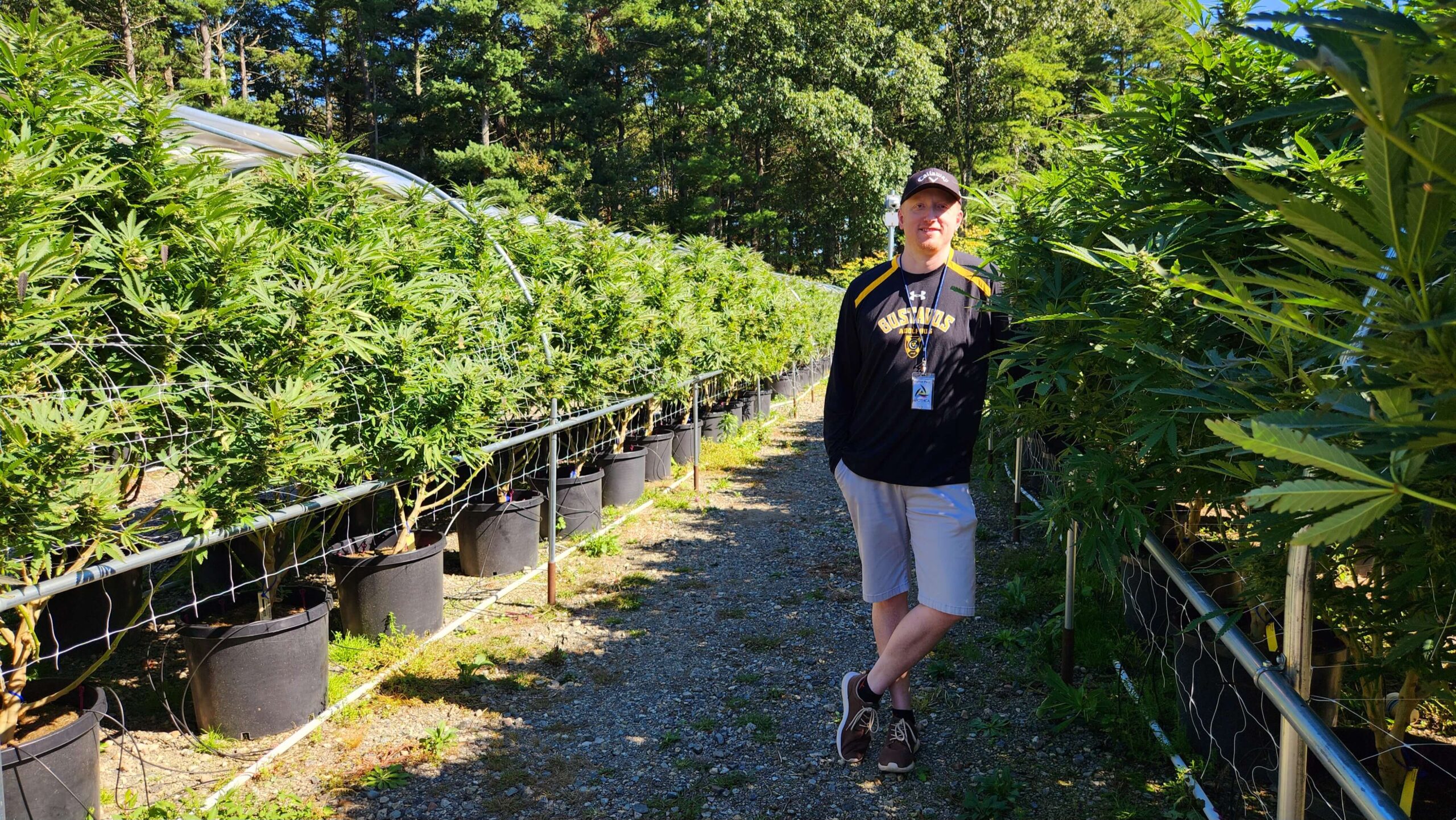
☀️ Intense, Reliable Sunlight
Australia receives high UV and PAR light levels – natural spectrum that drives vigorous photosynthesis. Outdoor photoperiods develop dense canopies and autoflowers finish with remarkable resin production.

🌱 Extended Growing Seasons
From September to April, frost-free days allow long vegetative phases. Photoperiods can reach monumental sizes; autoflowers can perform multiple back-to-back cycles from spring to autumn.

🌿 Natural Stress = Higher Potency
Gentle UV stress and temperature fluctuations trigger increased terpene and cannabinoid production. Outdoor Australian-grown plants often develop richer aromas and more complex effects than indoor.

💰 Cost-Effective & Sustainable
No electricity bills, no ventilation systems – just nature. Outdoor growing slashes costs and carbon footprint while delivering massive yields per plant. Ideal for soil, living soil, or organic setups.
🇦🇺 Pro tip: Match strains to your local climate – sativa-dominant for hot humid north, indica-leaning for temperate south. Our team helps you choose the perfect outdoor genetics.
About Us — Australia’s Trusted Seed Bank Since 2013
Operating from Australia since 2013, we source stable genetics from the world’s best breeders and specialize in fast, discreet shipping across Australia. Our team offers expert germination support, strain selection advice, and an industry-best customer care experience. Ethical sourcing, lab-tested genetics, and a focus on grower success define our service.
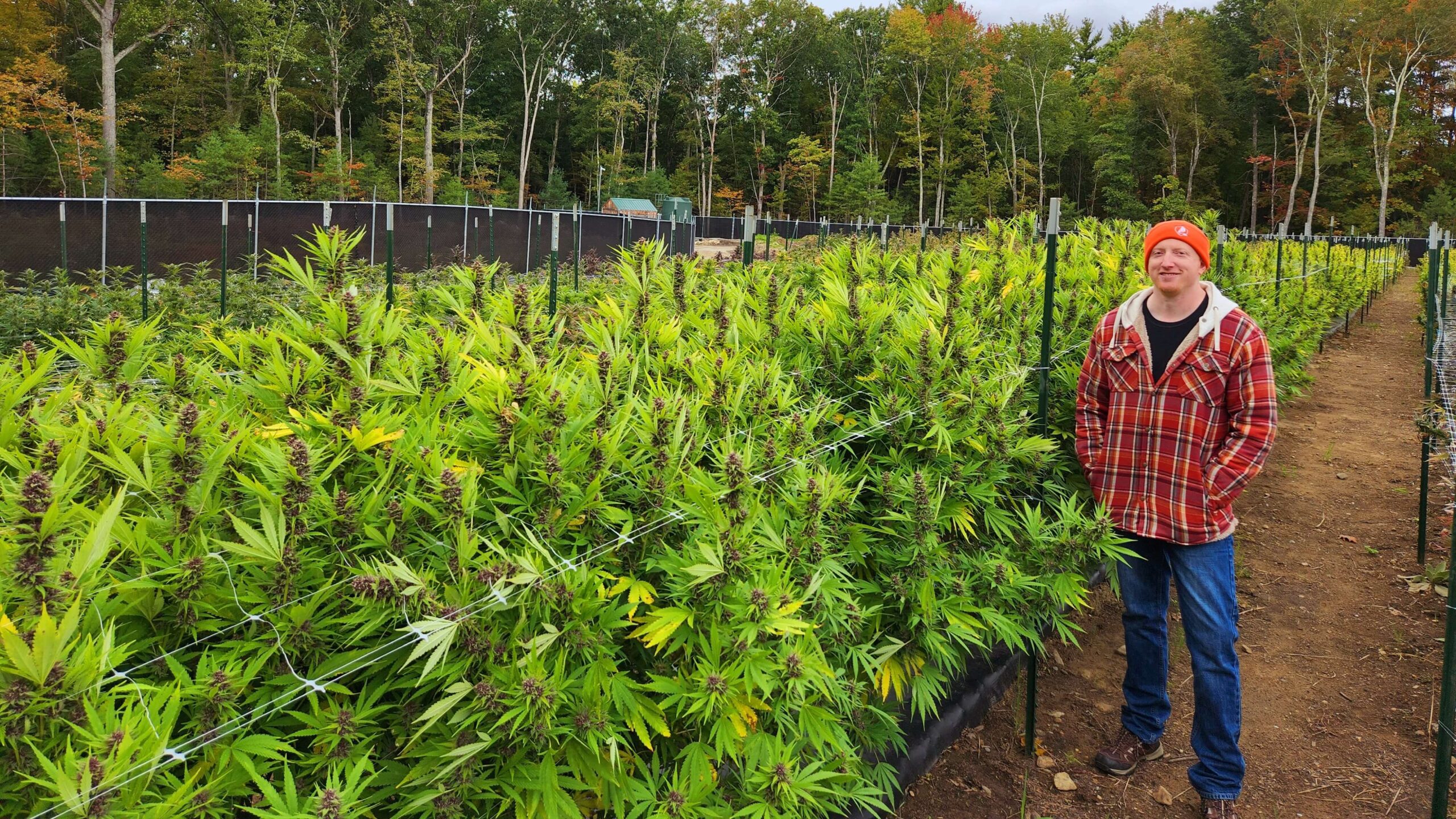
🌱 Tailored Genetics for Australia’s Diverse Climates
At our trusted seed bank, we don’t just sell seeds — we curate genetics specifically for Australian growing conditions. From the tropical humidity of Far North Queensland to the arid heat of South Australia and the cool temperate zones of Victoria and Tasmania, our seeds are rigorously tested to perform. We understand that a strain thriving in Perth may struggle in Byron Bay, which is why our expert team provides personalized strain recommendations based on your local weather patterns, soil type, and seasonal length.
Our genetic library features heat-tolerant varieties that withstand Australian summers, mold-resistant strains for coastal humidity, and fast-finishing phenotypes for shorter seasons. By matching the right genetics to your specific environment, we maximize germination rates, plant vigor, and final harvest quality. Since 2013, thousands of Australian growers have trusted our climate-matched seed selection — and you can too.
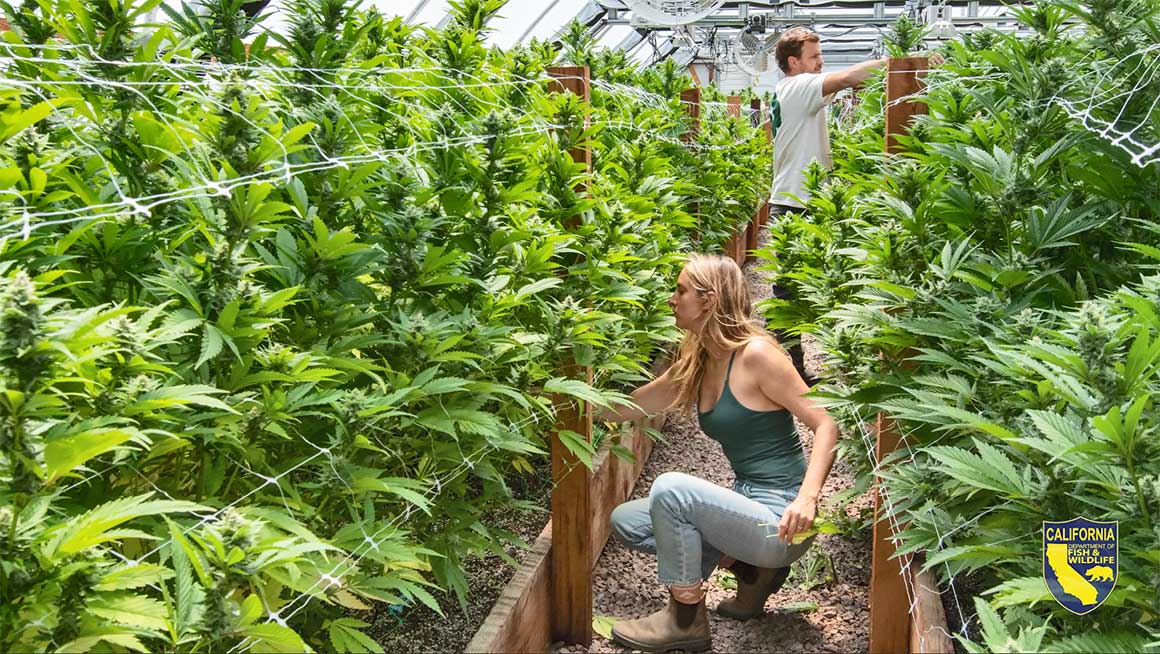
🌿 Why Photoperiod Strains Excel with Ample Outdoor Space
If you have a backyard, rural property, or dedicated outdoor garden, photoperiod cannabis seeds are your ticket to massive yields and premium quality. Unlike autoflowers that flower automatically, photoperiod strains respond to natural light cycles — and Australia’s long, sunny growing season (September through April) provides the perfect environment for these plants to reach their full potential. With abundant outdoor space, photoperiods develop extensive root systems, grow 2–3 metres tall, and produce harvests measured in pounds rather than ounces.
Beyond raw yield, photoperiod genetics offer superior terpene profiles, higher cannabinoid concentrations, and the ability to clone and preserve elite phenotypes. For Australian growers with space to spare, we recommend early-finishing photoperiods for cooler southern regions and long-flowering sativa-dominant varieties for the subtropical north. Our team provides detailed guidance on light deprivation techniques, training methods (SCROG, LST, topping), and seasonal timing to maximize your outdoor photoperiod grow.
🌱 1) What they are
Autoflowers: Cannabis strains that switch from vegetative to flowering automatically with age thanks to Ruderalis genetics. Rapid lifecycle and compact size.
Photoperiod plants: Traditional cannabis that requires a change in light schedule (usually 18/6 veg to 12/12 flower) to trigger flowering. Greater control over growth stages and final size.
⏱️ 2) Lifecycle & timing
Autoflower: Germination to harvest in as little as 8–12 weeks. Single-cycle or multiple cycles per season outdoors. Suitable for quick rotations.
Photoperiod: Vegetative phase can be extended for months then switched to flowering — total time typically 12–20+ weeks depending on grower choices and strain.
📏 3) Size & yield
Autoflower: Generally smaller, lower final yields per plant but faster turnaround. Ideal for limited space and stealth grows.
Photoperiod: Larger plants with potential for much higher yields per plant when vegged longer and trained (SCROG, LST, topping).
⚡ 4) Potency & variety
Autoflower: Modern autoflowers now reach high potency but historically slightly lower than photoperiod. Genetics keep improving rapidly.
Photoperiod: Wide selection of classic, high-THC and specialty strains; best for breeders and growers seeking maximum potency and phenotype selection.
🎮 5) Growing complexity & control
Autoflower: Easier for beginners — no light schedule changes needed. Limited scope for heavy training; avoid hard topping on very young autos.
Photoperiod: Requires light schedule control but allows full training options and shaping for large yields. Better for advanced growers who want maximum control.
🎯 6) Best use-cases
Autoflower: Beginners, quick harvest cycles, small spaces, guerrilla/outdoor stealth grows, multiple harvests per season.
Photoperiod: Commercial growers, large indoor setups, growers prioritizing yield, phenotype hunting and mother/clone programs.
💰 7) Cost & availability
Autoflower: Competitive pricing, good value for fast cycles.
Photoperiod: Wide price range; premium/rare photoperiod genetics can command higher prices.
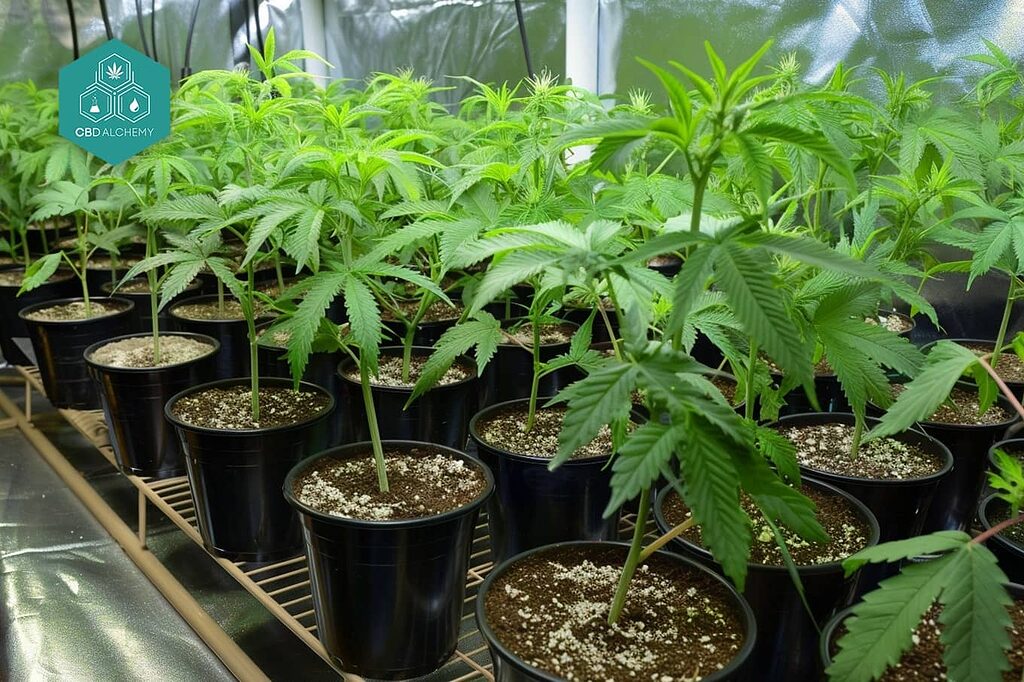
🏡🌿 Photoperiod: The Ultimate Dual-Environment Performer in Australia
Photoperiod cannabis strains are remarkably versatile across Australian growing environments — they thrive equally well indoors under controlled lighting AND outdoors in natural sunlight. Indoors, you maintain complete control over light cycles (18/6 for vegetative growth, 12/12 to trigger flowering), allowing year-round production regardless of external seasons. Outdoors, photoperiods synchronize with Australia’s natural seasonal changes, producing exceptionally dense, resinous buds that capitalize on our high-UV sunlight.
For cost-conscious growers, photoperiod genetics offer outstanding value: one set of mother plants can provide clones for years, dramatically reducing long-term seed expenses. Whether you’re running a commercial indoor operation in Melbourne, a greenhouse in the Adelaide Hills, or a mixed indoor/outdoor setup in regional NSW, photoperiod strains adapt seamlessly.
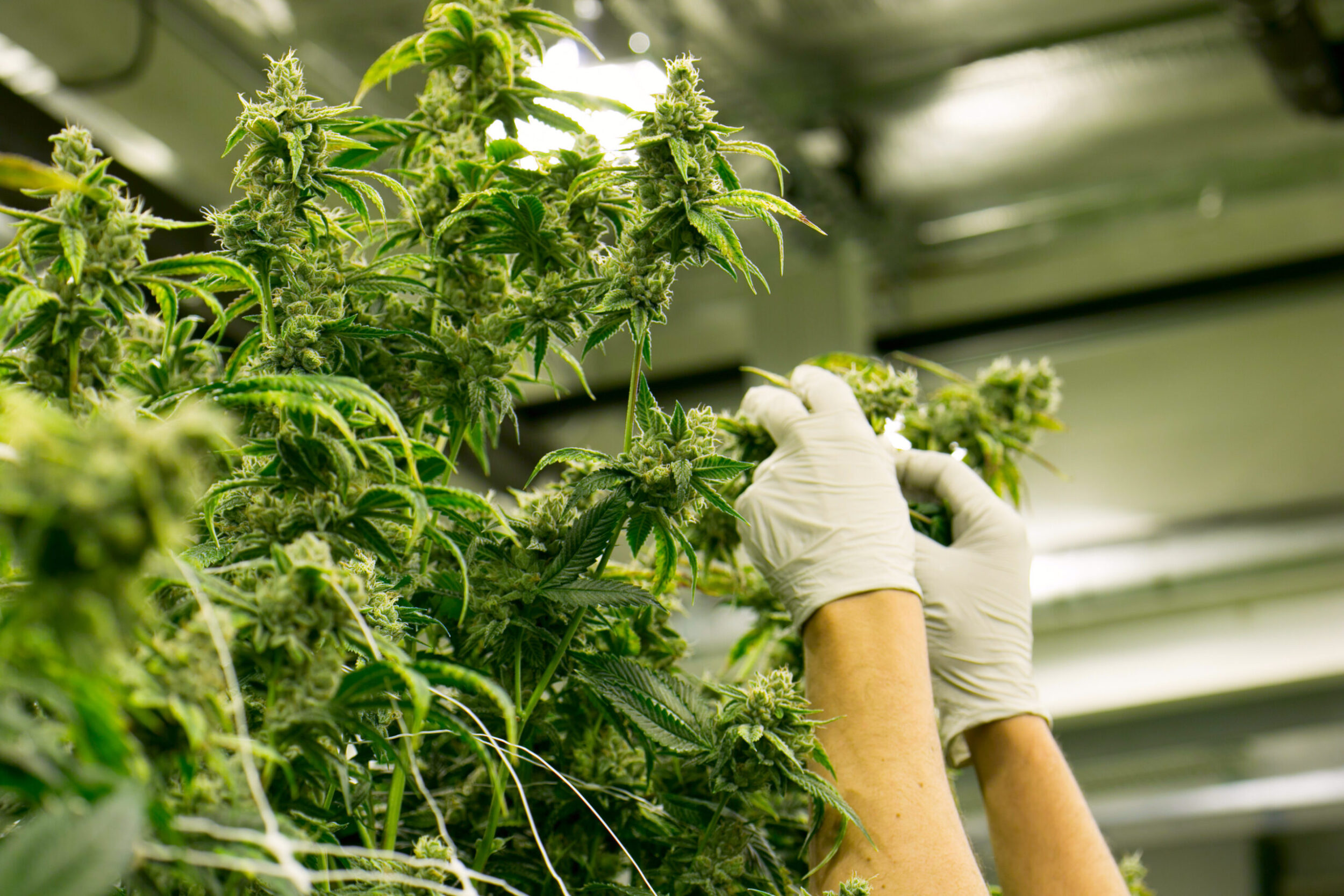
🏙️ Autoflowers: The Smart Choice for Limited Spaces in Australia
Not every Australian grower has acres of land — and that’s perfectly fine. For urban gardeners, apartment dwellers, balcony growers, and anyone with limited space, autoflowering seeds are the ultimate solution. Autoflowers remain compact (typically 30–100cm tall), flower automatically after 3-4 weeks regardless of light schedule, and complete their entire lifecycle in just 8-12 weeks from seed. This makes them ideal for discreet grows on balconies, in small backyards, wardrobes, or indoor grow tents.
In Australia’s major cities — Sydney, Melbourne, Brisbane, Perth, Adelaide — where space comes at a premium, autoflowers allow multiple harvests per season. You can start seeds in early spring, harvest by mid-summer, and plant another round immediately. Autoflowers require no light deprivation equipment, no complicated scheduling, and minimal training, making them perfect for beginners and experienced growers alike.
🌾 Harvest & Drying Masterclass: From Plant to Perfect Cure
Learn exactly when to chop, the last crucial step before harvest, and why professional drying beats sun-drying every time. These science-backed tips ensure mold‑free buds and maximum potency.

🔬 How to know when cannabis is ready for harvest + the last critical step
Three definitive signs of peak harvest readiness:
1️⃣ Trichome color (most reliable): Use a 60x-100x jewelers loupe. Examine resin glands on the calyx (not sugar leaves). Harvest when 70-90% of trichomes are milky/cloudy and 10-30% are amber. Clear trichomes = too early (weak effect). All amber = too late (sleepy, degraded THC).
2️⃣ Pistil color: 70-90% of white pistils should have darkened to brown/orange/red and curled inward. Fresh white pistil growth indicates the plant is still bulking up.
3️⃣ Bud density & swell: In the final 1-2 weeks, calyxes (the small, tear-shaped bracts) will swell noticeably. Buds will feel dense and firm when gently squeezed.
⭐ The last thing to do before cutting (to prevent mold & ensure perfect drying): Execute a 48-hour pre‑harvest dark period with low humidity (40-45%). Turn off all lights, increase indirect airflow, and do NOT water. This allows the plant to naturally transpire excess moisture from flowers and leaves, dramatically reducing the risk of botrytis (bud rot) during the first drying days. It also preserves terpenes by halting light degradation. After 48 hours, cut the main stem and move immediately to a climate‑controlled drying environment – never in direct sun.
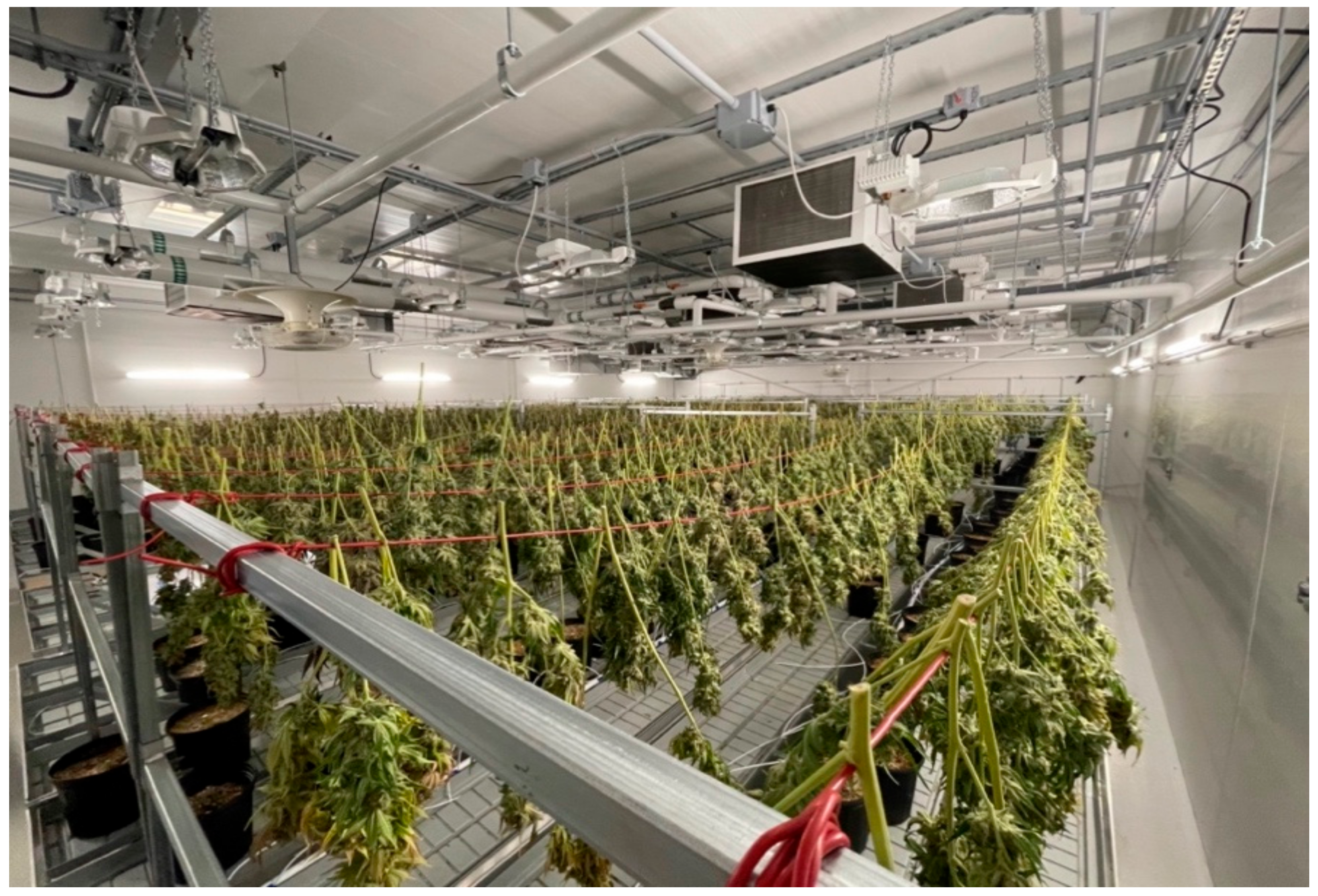
🌀 Why hang cannabis upside down to dry & why sun drying destroys your harvest
Upside‑down hanging (the professional standard): After harvest, hang whole plants or large branches inverted in a dark, climate-controlled room at 60-70°F (15-21°C) and 55-65% RH with gentle, indirect airflow. Gravity and capillary action draw residual moisture from thick stems toward the buds, creating an ultra‑slow, even dry over 10-14 days. This preserves terpenes, prevents case hardening (dry outside, wet inside), and eliminates mold pockets. Buds maintain their natural shape without compression.
☀️ Why sun drying is NEVER acceptable for quality cannabis: Direct sunlight degrades THC into CBN (causing a sedative, disorienting high) and flash‑vaporizes terpenes, leaving a hay/grass smell. High heat dries the exterior in 24-48 hours while trapping moisture inside – the #1 cause of bud rot (botrytis). UV radiation also bleaches trichomes and locks in chlorophyll, producing a harsh, green taste that no cure can fix. Sun drying is for oregano, not premium cannabis. Authentic, lab‑tested cannabis always requires a dark, climate‑controlled room.
🌬️ Pro drying & curing checklist
✅ Maintain 60-70°F (15-21°C) and 55-65% RH for 10-14 days in complete darkness
✅ Hang plants upside down with gentle, indirect airflow (oscillating fan – never point directly at buds)
✅ Small stems should snap, not bend, before curing
✅ Avoid sun, ovens, dehydrators, or microwaves – they ruin potency
✅ After drying, cure in airtight glass jars at 62% RH for 2-4 weeks, burping daily the first week
✅ Store in cool, dark place for long-term preservation
🌿 Grower Tips (Auto vs Photo)
Feeding: Autos often need lighter feeding schedules; photoperiods tolerate and benefit from heavier veg feeding.
Lighting: Autos do well under 18/6 or even 20/4; photoperiods require 12/12 to flower.
Training: Photoperiods can handle high-stress training (topping, mainlining); autos prefer low-stress techniques.